
The raw material….
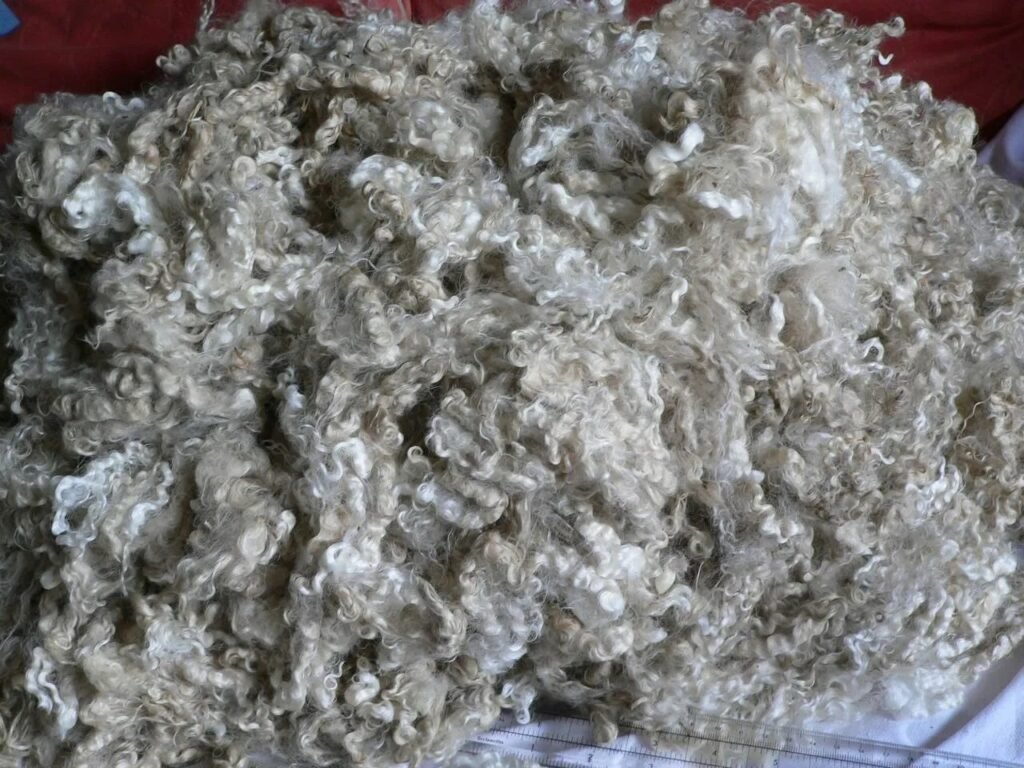
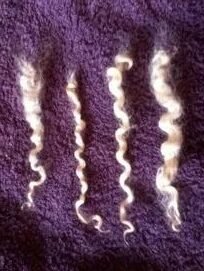
A single fleece consists of individual strands of mohair grouped together into staples that look like ringlets. The individual fibres are very fine in a kid, but gradually become coarser as the animal gets older. The staples also become less curly as the goat ages.
Fine, lacy garments that are worn next to the skin are therefore best made from kid mohair, whilst socks and sweaters can be made from young adult goat fleece.
Most spinners prefer to work with clean fibre.
Gentle washing with hot, soapy water, followed by rinsing and drying naturally in fresh air, brings out the shine and softness.
Then it can be combed or carded ready for spinning.
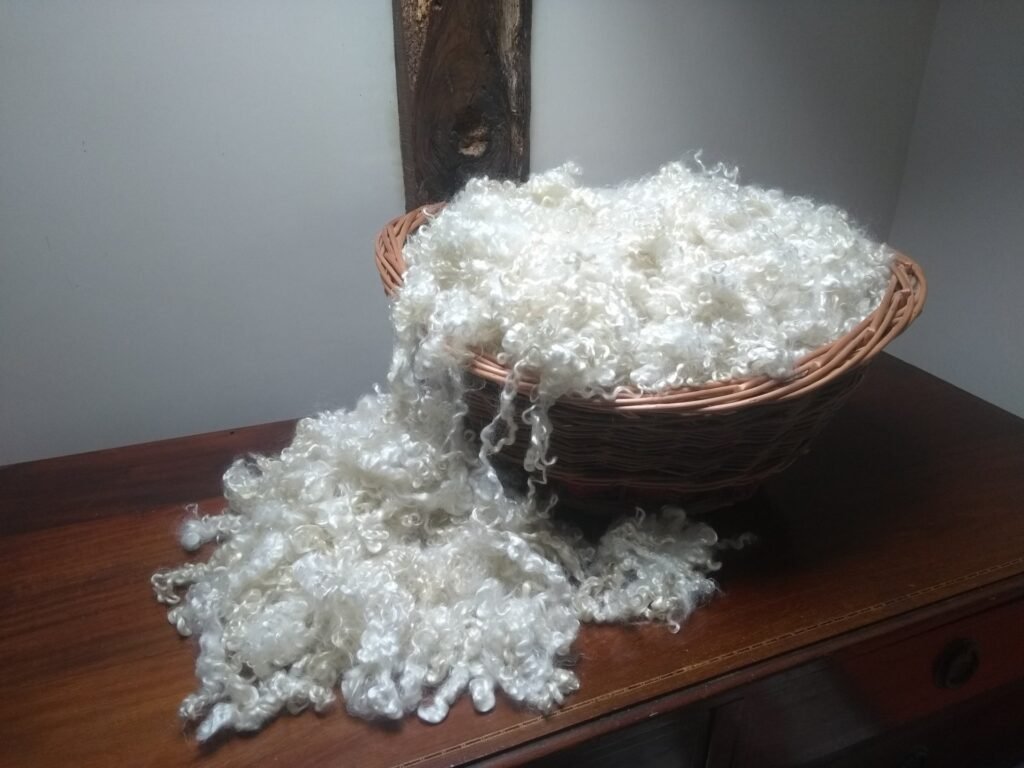
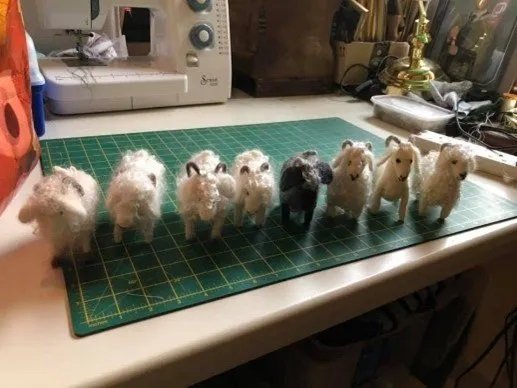
Mohair can also be used for wet felting with sheep’s wool, needle-felting, doll’s hair and many other crafts.
Mohair has outstanding dyeing properties, and the fleece can be dyed either before spinning or afterwards, using natural or artificial dyes
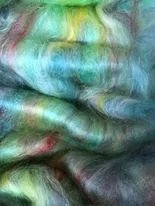
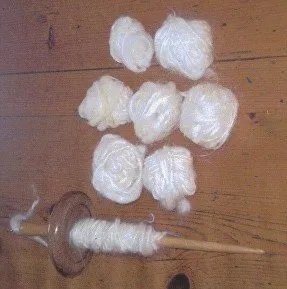
Some people start learning to spin using a simple drop spindle, and even this method allows a comparison of different fleece qualities.
Interesting textures can be achieved by blending the mohair with other fibres, such as wool, alpaca, or silk, either during the carding process or spinning itself.
Balls of different fibres can be plied together to form multi-coloured yarn, or a rainbow effect can be achieved during the dyeing process.
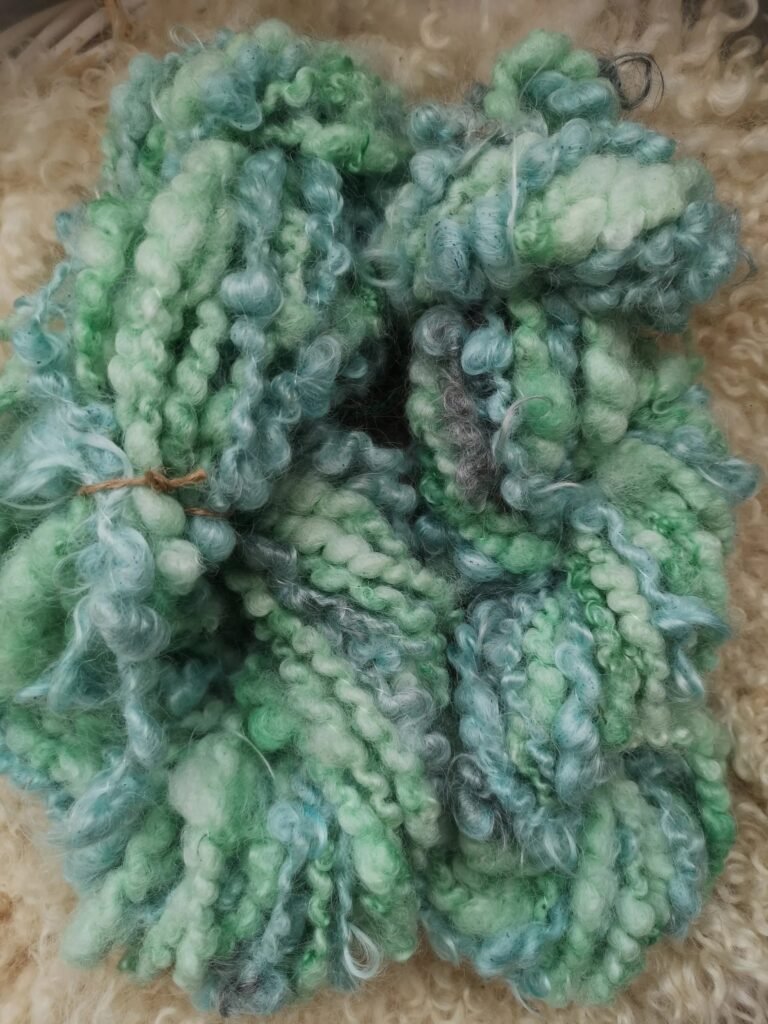
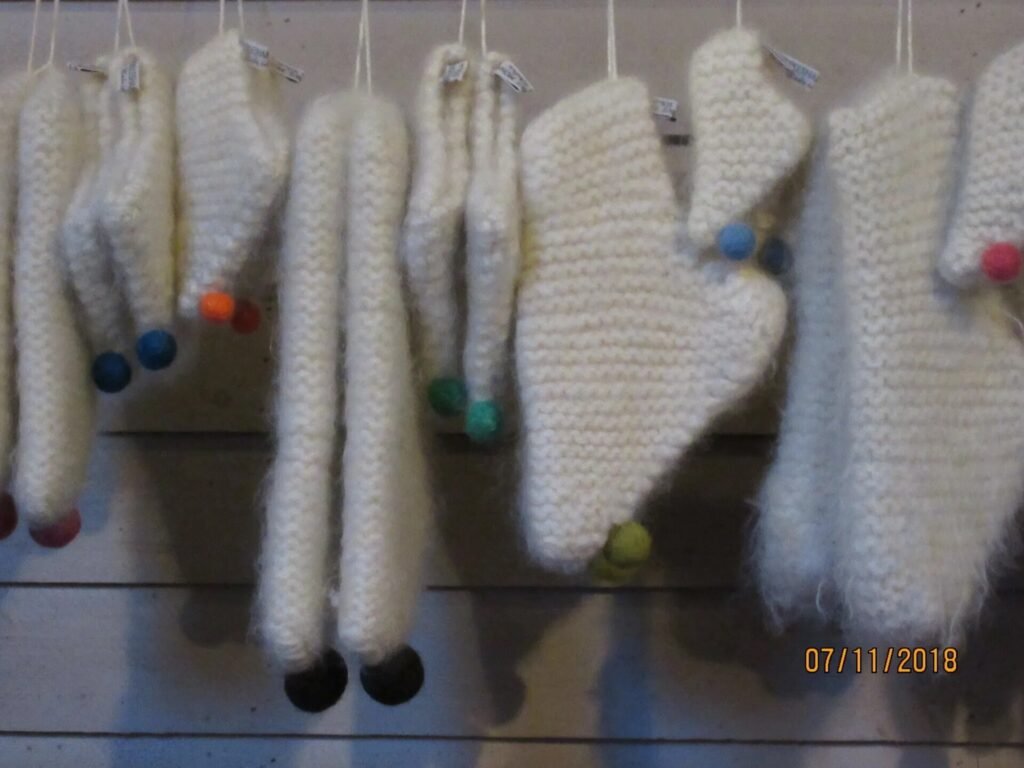
After spinning and plying as appropriate, mohair yarn is ideal for knitting, crocheting, and weaving.
The pictures on this page show some of the products that W & W members have crafted from the fleeces of their own angora goats.
See also the page A gallery of mohair for more photographs of yarn and finished articles.